
Bedale Hunt Supporters Club Hunter Trial
Sunday 11 October 2026
Entries close in 2 days

5 upcoming events
Next event:
22/10/2026 ShowJump Training with Sophie Minikin
Find out more ..
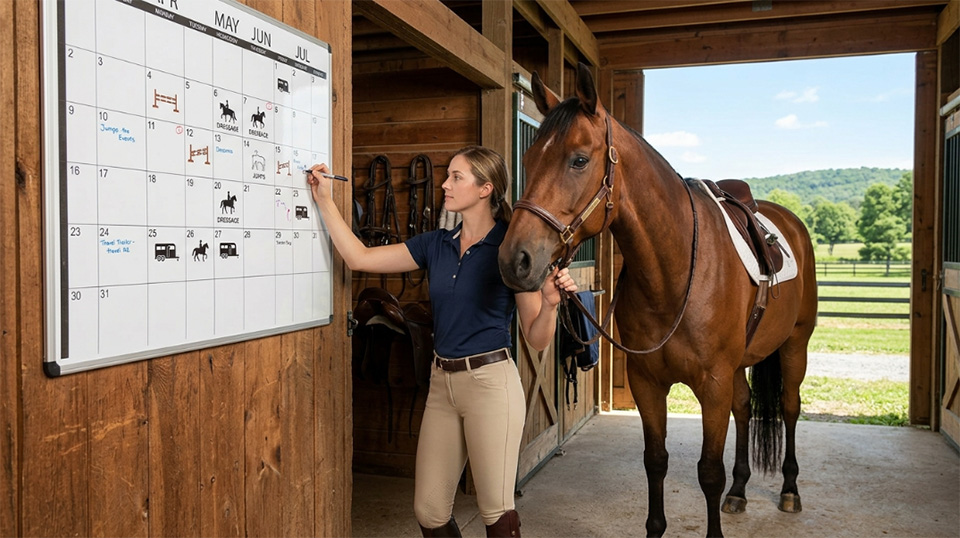
Building an equestrian competition calendar can help riders organize their season around meaningful goals rather than entering events as they appear. While platforms such as Spin Plus provide access to online casino gaming, riders have different tools and platforms for planning their schedules. A well-organized competition calendar can bring together events, training sessions, clinics, and recovery periods while accounting for the horse’s needs, the rider’s experience, travel requirements, and important entry deadlines.
The initial thing to do is decide what you want your objectives to be throughout the season. Some riders may choose to use the season to learn the ropes through local competitions. Some may focus on qualification rounds to gain experience in particular skill areas or to prepare for a huge championship event.
Your goals will also guide you in planning the most important events. Moreover, it is important to take into account your horse’s current level of training and experience. A calendar should be developed to allow progression without overwhelming demands.
After understanding your goals, start picking out the events that mean the most to you. These events can include competitions, qualifiers, championships, or specific venues you wish to visit.
Then look at other effective events that could serve those objectives. Smaller competitions can help gain experience prior to the big event, while training days can be a good way to improve certain skills.
By making categories such as priority events, training events, and optional events, you would make it easier to deal with your calendar.
There is much more to a competition calendar than a collection of events lined up one right after the other. It’s crucial that horses are given enough time off in between intensive competitions and allowed to go through their normal training or recovery process.
When creating a competition calendar keep in mind how much work the horse will need to put in at every event and make sure that the time between competitions is sufficient for recuperation. There might be instances when it’s not recommended for the horse to have a busy weekend followed immediately by another exhausting competition.
In addition to that, leaving gaps in the competition calendar gives you some breathing space if your plans change. This is important because the weather, health of the horse, training progress and other circumstances can interfere with everything.
Location is a critical factor when selecting the events to participate in. A competition might seem ideal, but it can involve multiple hours of travel that might take a toll on the horse and its rider.
When adding events to your calendar, make sure to take into consideration the distance from home, travel time, accommodation requirements, and if the venue is horse-friendly. Trying to consolidate competitions into the same area can sometimes help manage a busy competition schedule better.
It can also be good to explore nearby options in case a preferred event is either not viable or sold out.
The dates for events are just one aspect of organizing contests. Riders should also mark the opening and closing dates for the entries.
Some events may be restricted in number of entries available or might have varying closing dates for certain classes. Marking these dates on the calendar will allow you to check the conditions, make sure everything is in order and send the entries on time.
Additionally, it is recommended to add several other important aspects to the information accompanying each event, such as the class or type of the competition, the location of the event, the fee for joining the event, and any documentation that may be required.
A competition agenda is not made up of competitions only. Training, clinics and schooling days also form an important part of events taking place in the season.
For example, a show jumper may plan to take part in jumping sessions before an important event. A dressage rider may also include clinics to practice certain training elements or improve specificity of control.
Pairing these activities with competitions shall help achieve a more equal distribution of competitions throughout the season and provide riders with an opportunity to practice their weak points before returning to the competition.
Even the best-planned competition timetable can be modified. Remember that nothing is set in stone.
A horse may need extra rest; the rider may want to reorganize the training process, or the event in question may be cancelled or postponed. It is useful to think of a few alternative events in order to be able to adjust accordingly.
A simple digital calendar or spreadsheet may serve as a helpful tool in running the identified events.
A good equestrian competition schedule should take into account horse and rider rather than just the number of events hosted. Begin with the major goals you have and identify the significant competitions relevant to them. Make sure to arrange training sessions around those significant competitions.
Make time for rest and think about travel requirements. A good calendar is one that provides you with a well-organized training plan for the year while allowing some flexibility regarding what horse needs.


 0 entries £0.00